
How Much Does Biohazard Cleanup Cost in Newark?
When something traumatic happens in a Newark home, cost is usually the second question — right after whether anyone can help. The honest answer is that there is no single price for biohazard cleanup. Published national cost guides put most residential jobs between $3,000 and $5,000, with smaller jobs from around $500 and severe cases above $25,000. Where a particular job lands depends on what happened, how much area is affected, what materials absorbed it, and how long it sat before anyone called.
What drives the price
The type and amount of contamination sets the baseline. A small, contained spill on a hard floor is a different job from bodily fluids that soaked through carpet, padding, and subfloor. More material, and wider spread, means more labor, disinfectant, and removal.
Materials matter as much as area. Non-porous surfaces — tile, sealed concrete, glass, metal — can usually be cleaned and disinfected in place. Porous materials — carpet, drywall, upholstery, untreated wood — often cannot be fully decontaminated once fluids soak in, so they must be cut out, bagged, and sent to a licensed medical waste facility. Every square foot removed adds labor and disposal cost.
Time undiscovered is the biggest cost multiplier. Contamination handled within hours often stays on the surface. Left for a day or more, fluids migrate deeper, odor spreads through the structure, and decomposition accelerates in warm conditions. Jobs discovered after days or weeks routinely land at the upper end of every range, because the work shifts from cleaning to removal and odor treatment.
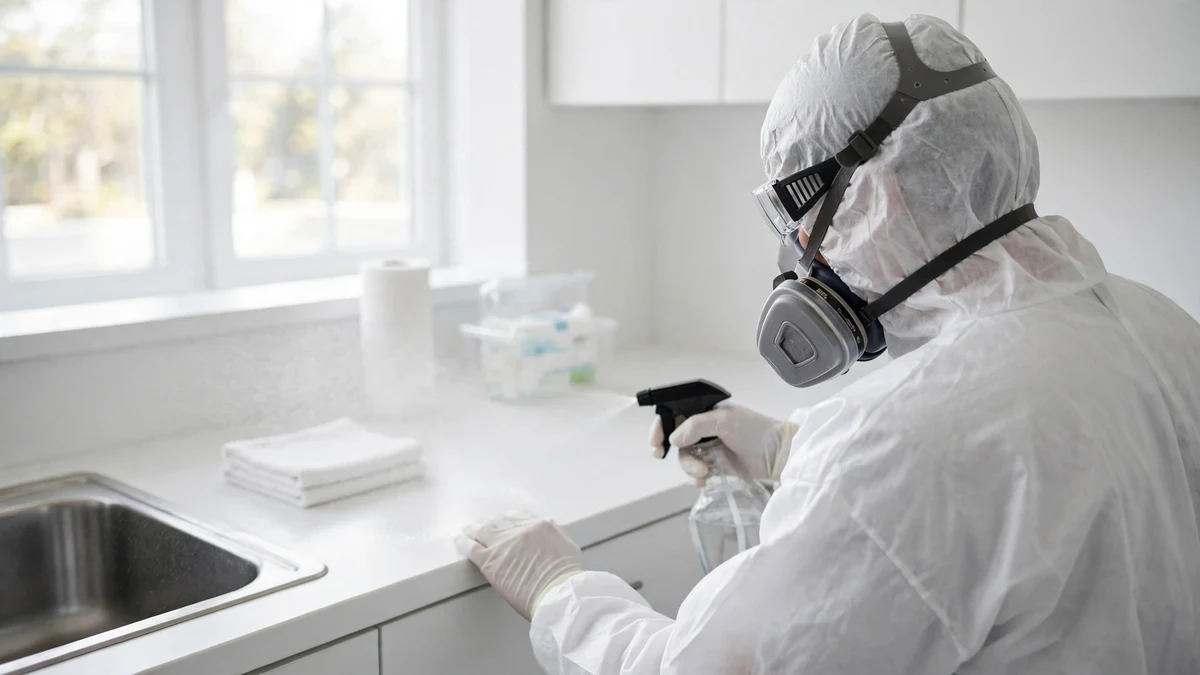
Real biohazard work also carries costs a regular cleaning service does not: full protective equipment, EPA-registered disinfectants applied at labeled concentrations and dwell times, and regulated waste disposal through licensed transporters. OSHA's bloodborne pathogens standard (29 CFR 1910.1030) sets handling and disposal rules for anything that contacted blood or bodily fluids. Biohazard waste removal through proper channels is part of the price, not an add-on.
Odor treatment rounds out the quote. Death and decomposition odor penetrates porous materials and air systems, and removing it at the source takes equipment and time.
Typical ranges by situation
The ranges below come from published national cost guides, including Fixr and industry guides. They are estimates only — not Newark quotes, and not prices set by this site. Final pricing comes from the provider after an on-site assessment.
Small blood or bodily fluid spill, contained, on hard surfaces: $500–$2,500. Limited area, no material removal, fast turnaround.
Crime scene or trauma cleanup, most homes: $1,500–$7,500. Volume of biological material, rooms affected, and whether fluids reached porous materials drive the range. See crime scene cleanup.
Unattended death: $2,000–$7,000 and above. Time between death and discovery is the main driver. See unattended death cleanup.
Hoarding with biohazards: $1,000–$25,000 and above. Severity level, waste volume, and whether human or animal waste is present swing this range wider than any other. See hoarding cleanup.
Infectious disease decontamination: $2,000–$8,000. Pathogen type, square footage, and air-system scope set the price.
Vehicle biohazard cleanup: $500–$8,000. Surface types and whether contamination reached the ventilation system matter most.
Sewage or black water: $2,000–$10,000. Flood area, pathogen load, and how much material is saturated.
What insurance may cover
In many cases, yes — for sudden and accidental events. Standard homeowners policies are built around sudden damage to the dwelling, and biohazard remediation after a covered event frequently falls under those provisions. Gradual conditions, such as contamination that developed over months without a sudden trigger, and intentional acts by the named insured, are commonly excluded. For the full picture, see does homeowners insurance cover biohazard cleanup.
Documentation is what turns a claim from an argument into a file. Providers typically produce itemized scopes, before-and-after photos, and waste disposal records that adjusters expect. Newark Biohazard Cleanup and Remediation is a referral service. We connect you with local providers; those providers set pricing after an on-site assessment, and we do not process insurance claims ourselves.
How to get an accurate quote
No responsible provider prices a biohazard job sight unseen, because the price lives in details a phone call cannot confirm: how far fluids traveled, which materials absorbed them, and what disposal they require. Expect an assessment first — by phone with photos, or on site — followed by a written scope. A quote that never asks these questions is a warning sign, not a bargain. If you need biohazard cleanup in Newark, the first step is a call and an assessment.
- What happened, and when it was discovered
- Which rooms and surfaces are affected
- Whether police have released the scene, if applicable
- Whether water or sewage is involved
- Your insurance carrier, if you plan to claim
What not to do to save money
Cleaning blood or decomposition yourself to save money usually costs more in the end. Without protective equipment and proper disinfectants, you risk exposure and spread contamination to clean areas — and insurers may question a claim when untrained cleanup disturbed the scene. Regular cleaning services are no substitute either: they lack the protocols and licensed disposal biohazard work requires. See why you should never clean blood yourself. Calling early is the one move that reliably lowers the bill, because every hour of delay lets contamination travel deeper.
Frequently Asked Questions
How much does biohazard cleanup cost in Newark?
There is no single price. Published national guides put most residential jobs between $3,000 and $5,000, with smaller jobs from around $500 and severe cases above $25,000. The exact price for a Newark job comes from the provider after an on-site assessment.
Does homeowners insurance cover biohazard cleanup?
Often, for sudden and accidental events such as a crime scene or accidental death in the home. Gradual contamination and intentional acts are commonly excluded. Coverage depends on the policy language, so the carrier's answer is the one that counts.
Why do quotes for the same job vary so much?
Because providers price different scopes. One quote may cover cleaning only, while another includes porous material removal, odor treatment, and regulated waste disposal. Compare written scopes line by line, not just totals.
Can I clean up blood myself to save money?
No. Blood and bodily fluids can carry bloodborne pathogens, and untrained cleanup risks exposure and spreads contamination. It can also complicate an insurance claim. Leave it to providers with protective equipment, proper disinfectants, and licensed disposal.
Need Help in Newark?
Call to connect with a local biohazard cleanup provider.
Call Now – 24/7 Emergency